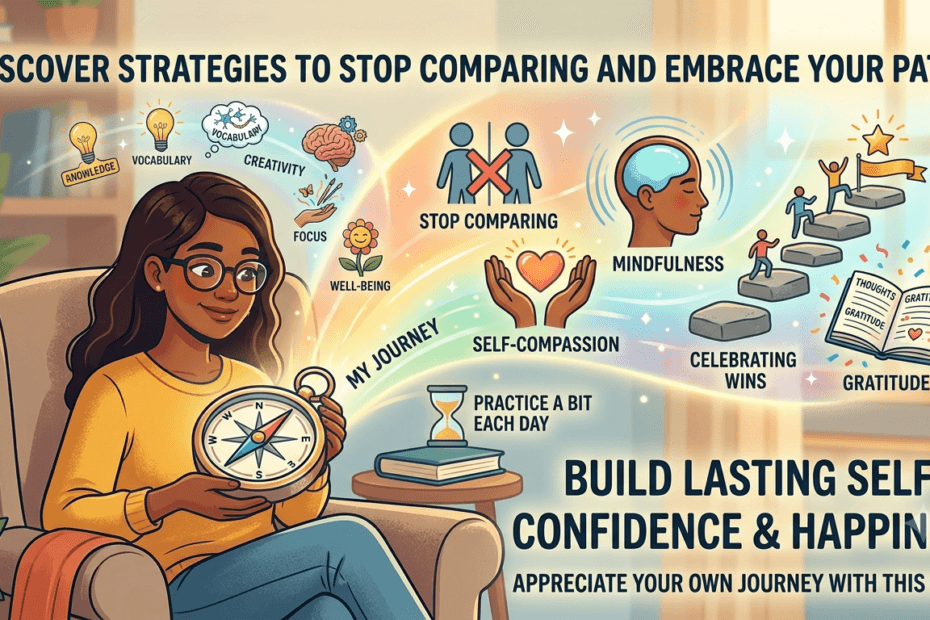
Have you ever looked at someone else’s success and wondered, “Why am I not doing as well as they are?” If your answer is yes, you’re not alone. Almost everyone compares themselves to others at some point. Whether it’s a friend’s new job, someone’s perfect vacation photos, or a colleague’s promotion, comparison has become a common part of everyday life.
The problem is that constant comparison can slowly affect your confidence, happiness, and peace of mind. Instead of appreciating your own progress, you begin to focus only on what you don’t have. Over time, this mindset can leave you feeling discouraged, even when you’re doing well.
The good news is that comparison doesn’t have to control your life. By changing the way you think and focusing on your own journey, you can build confidence, enjoy your achievements, and feel happier with who you are.
In this article, you’ll learn why people compare themselves to others, how it affects your mental well-being, and practical steps to stop comparing yourself and start living with greater confidence
Why Do We Compare Ourselves to Others?
Comparison is a natural human habit. From an early age, we are surrounded by comparisons. At school, students compare marks. At work, employees compare salaries and promotions. On social media, people compare lifestyles, relationships, and appearances.
Our brain naturally wants to measure progress by looking at other people. While this can sometimes motivate us, it often creates unnecessary pressure because we compare our everyday reality with someone else’s highlight moments.
Many people also forget that they don’t know the full story behind another person’s success. Every achievement usually comes with years of hard work, failures, sacrifices, and challenges that aren’t visible online.
The Hidden Cost of Constant Comparison
At first, comparing yourself to others may seem harmless. However, when it becomes a daily habit, it can affect many areas of your life.
You may begin to feel that you’re never good enough, no matter how much you achieve. Instead of celebrating your own milestones, you only notice what others have accomplished.
Over time, this can lead to:
- Lower self-confidence
- Increased stress and anxiety
- Feelings of jealousy
- Lack of motivation
- Negative thinking
- Difficulty enjoying your own achievements
Comparison can steal the joy from your own progress.
Remember That Everyone Has a Different Journey
One of the biggest mistakes people make is assuming that everyone’s life follows the same timeline.
Some people build successful careers in their twenties, while others find success much later. Some get married early, while others focus on education or personal goals first. There is no universal schedule for success.
Life is not a race.
Your experiences, opportunities, challenges, and goals are unique. Comparing your journey to someone else’s only creates unnecessary pressure.
Instead of asking, “Why am I behind?” ask yourself, “Am I making progress compared to where I was last year?”
That question shifts your attention back to your own growth.
Understand That Social Media Doesn’t Show Real Life
Social media has made comparison easier than ever.
People usually share their happiest moments—vacations, promotions, celebrations, expensive purchases, and achievements. They rarely post about their failures, financial struggles, disappointments, or personal challenges.
As a result, it’s easy to believe that everyone else has a perfect life.
The truth is that social media shows only a small part of someone’s reality.
If scrolling through social media leaves you feeling unhappy or inadequate, consider limiting your screen time or following accounts that inspire and educate rather than make you compare yourself.
Focus on Your Own Strengths
Every person has unique talents, abilities, and experiences.
Instead of concentrating on what others do better, spend time discovering your own strengths.
Ask yourself:
- What skills am I good at?
- What challenges have I already overcome?
- What achievements am I proud of?
- What makes me different?
When you focus on your strengths, your confidence naturally grows because you’re building your identity around your own abilities rather than someone else’s success.
Celebrate Your Small Wins
Many people ignore their progress because they’re waiting for a huge achievement before they feel proud.
In reality, success is built through small, consistent improvements.
Maybe you finished a difficult project, learned a new skill, exercised regularly for a week, or saved some money. These are all victories worth celebrating.
Recognizing small achievements helps you stay motivated and reminds you that progress matters more than perfection.
Practice Gratitude Every Day
Gratitude is one of the simplest ways to reduce comparison.
When you regularly think about what you already have, your attention shifts away from what you’re missing.
Every day, write down three things you’re grateful for.
They don’t have to be big. It could be your family, your health, a supportive friend, your job, or simply having a peaceful evening.
Gratitude helps you appreciate your own life instead of constantly measuring it against someone else’s.
Set Personal Goals Instead of Competing with Others
Your goals should reflect your dreams, not someone else’s expectations.
Take time to define what success means to you.
Maybe your goal is financial stability, learning a new language, improving your health, or spending more quality time with your family.
When your goals are personal, you stop chasing other people’s achievements and start creating a life that truly makes you happy.
Stop Seeking Constant Approval
Many people compare themselves because they want validation from others.
While compliments and recognition feel good, depending on them for your happiness can become exhausting.
True confidence comes from knowing that your value doesn’t depend on likes, followers, promotions, or other people’s opinions.
Learn to appreciate your own efforts even when nobody else notices them.
Turn Comparison into Inspiration
Comparison doesn’t always have to be negative.
Instead of feeling jealous of someone’s success, ask yourself:
- What can I learn from them?
- What habits helped them succeed?
- How can I apply those lessons to my own life?
This small change in perspective transforms comparison into motivation.
Success becomes something to learn from instead of something to fear.
Avoid Perfectionism
Perfectionism often goes hand in hand with comparison.
You may feel that your work, appearance, or achievements are never good enough because someone else always seems better.
The truth is that perfection doesn’t exist.
Making mistakes, learning, and improving are natural parts of life.
Aim for progress, not perfection.
Surround Yourself with Positive People
The people around you influence your mindset.
Supportive friends encourage your growth and celebrate your achievements.
Negative people, on the other hand, constantly compare, criticize, and compete.
Spend more time with people who inspire you to become better without making you feel inadequate.
Healthy relationships make it easier to appreciate your own journey.
Limit Negative Self-Talk
The words you say to yourself matter.
Instead of thinking:
“I’ll never be successful.”
Try saying:
“I’m improving every day.”
Instead of:
“I’m behind everyone.”
Say:
“My journey is different, and that’s okay.”
Positive self-talk helps replace harmful comparison with confidence and self-belief.
Keep a Personal Progress Journal
One effective way to stop comparing yourself is by tracking your own growth.
Write down:
- Goals you’ve achieved
- Skills you’ve learned
- Challenges you’ve overcome
- New habits you’ve built
- Lessons you’ve learned
Looking back at your progress reminds you how far you’ve come, making it easier to focus on your own development.
Accept That Everyone Faces Challenges
It’s easy to assume that successful people have perfect lives.
In reality, everyone struggles with something.
Some face financial problems, health issues, family difficulties, or self-doubt.
You simply don’t see these challenges because people rarely share them publicly.
Remembering this helps you avoid unrealistic comparisons.
How to Build Lasting Self-Confidence
Confidence doesn’t appear overnight.
It grows through daily actions.
You can build confidence by:
- Keeping promises to yourself
- Learning new skills
- Taking care of your health
- Reading regularly
- Practicing gratitude
- Helping others
- Setting realistic goals
- Celebrating progress
The more you invest in yourself, the less you’ll feel the need to compare yourself with others.
Simple Daily Habits to Stop Comparing Yourself
Here are a few habits that can make a big difference:
- Spend less time on social media.
- Read books that inspire personal growth.
- Practice gratitude every morning.
- Exercise regularly.
- Focus on learning instead of competing.
- Celebrate one small win each day.
- Avoid comparing your beginning to someone else’s success.
These habits may seem small, but they can gradually change your mindset.